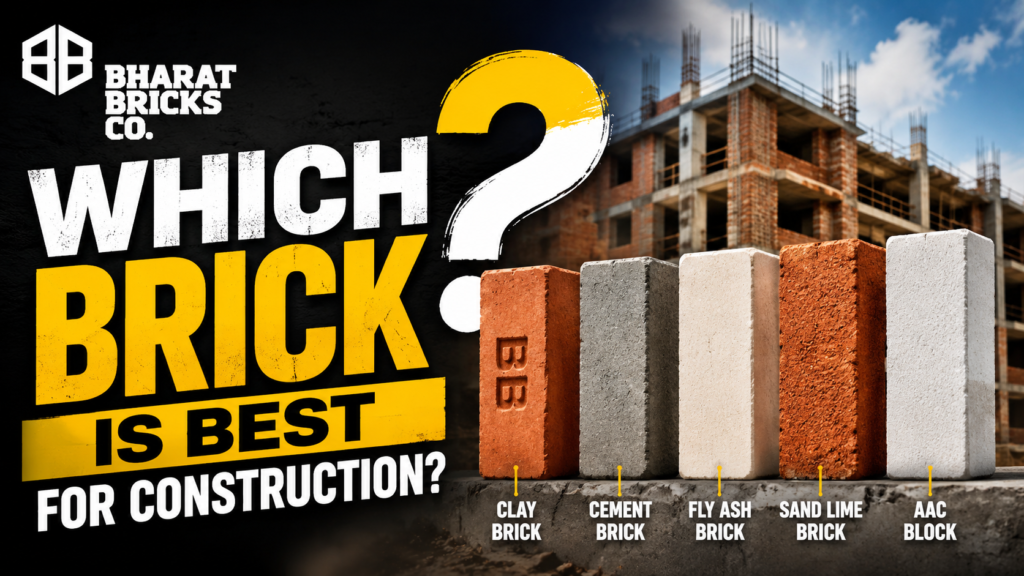





Which Brick Is Best For Construction
In India, the brick kiln industry plays a major role in construction and employment, with thousands of kilns operating across states like Punjab, Uttar Pradesh, Haryana, and Rajasthan. This is why the right brick for your construction needs is an essential step in the gievn direction.
Bharat bricks is the best way to have a wide range of machine made bricks has helped build better, more stylish and more secure homes. The machine made bricks use de-airing pug-mill, which is latest innovation in the clay processing industry.
What Makes a Brick Good for Construction?
A good brick creates a good foundation, and a good foundation creates a good building. A good brick should be capable of withstanding different environmental conditions. The quality of bricks directly affects the strength, safety, and lifespan of a building. Good bricks should be able to bear heavy loads without cracking or breaking. Strong bricks are essential for residential, commercial, and industrial structures. Quality bricks absorb less water, which helps prevent dampness, cracks, and structural damage. Ideally, bricks should absorb less than 20% of their weight in water. A good brick should resist weathering, moisture, and temperature changes. Durable bricks increase the lifespan of the structure and reduce maintenance costs.
What are the Different Types of Bricks Used in Construction?
There are so many different bricks used in construction. Careful evaluation of these factors can help ensure a strong, safe, and long-lasting construction project. Finding the right one can seem difficult at times. Some of them are given below. These can be used to create all kinds of homes.
| Brick name | Size |
| Sand Blast | 230 × 75 × 20 mm |
| Oakbuff Tile | 228 × 110 × 40 mm |
| Floor Tile | 150 × 150 × 25 mm |
| Hollow Cool Roof Tile | 228 × 228 × 50 mm |
| Floor Tiles (Red / Brown) | 228 × 110 × 40 mm |
| 3 Hole Bricks | 228 × 70 × 110 mm |
| 4 Hole Bricks | 228 × 70 × 110 mm |
| Press Brick Gray | 228 × 70 × 110 mm |
| Extruder Brick | 228 × 70 × 110 mm |
| 10 Hole Bricks | 228 × 70 × 110 mm |
| 8 Blind Hole Bricks | 228 × 70 × 110 mm |
| Bull Nose Bricks | 228 × 70 × 110 mm |
| Oakbuff Brick | 228 × 70 × 110 mm |
| Block | 225 × 225 × 110 mm |
| Lightweight Block | 228 × 225 × 110 mm |
What are the Factors to Consider Before Choosing Bricks?
Choosing the right brick for your construction can be a hard thing to do. The right quality, durability, and appearance of a building largely depend on the type of bricks used. Before selecting bricks for your home, commercial building, or industrial project, consider the following factors carefully.
- Strength and Durability
- Brick Type
- Water Absorption
- Size and Shape
- Compressive Strength
- Thermal Insulation
- Sound Insulation
Why choose Bharat Bricks for Construction material?
The way our surroundings work in concert with function and aesthetics affects us more than we realize, shaping how we live and influencing our cultural identity. It’s not only the type of materials used in a building or living space, but their color, texture, size, and shape that have a significant impact on how space is perceived.
- We consider all those things when we develop and produce our wide selection of products.
- As an integrated masonry and landscape products provider, we are the one trusted source for quality, durability, and long-lasting style. It’s the trust our customers place in us that keeps us focused on our goal to lead the way in innovation, affordability, and lifetime satisfaction.\
- We are dedicated to engineering masonry and landscaping materials that prompt an immediate response. When you see driveways, homes, commercial buildings, or backyard landscaping projects, you see Bharat Bricks products.
- When you purchase Bharat Bricks products, you invest in longevity, in stunning aesthetics, and in us.
- We take that investment seriously. We are motivated to strive to do more, to do better; we aspire to be the industry leader, evolving to meet the needs of clients and stay ahead of market trends.
- From our state-of-the-art production facilities to quality control, distribution, and customer service, we ensure our products are made to last while exceeding our customers’ dreams.
Conclusion
We hope to have given you enough information on how to know Which Brick Is Best For Construction. For more such information, please contact Bharat Bricks.
Frequently Asked Questions
Which type of brick is best for house construction?
First-class clay bricks and fly ash bricks are commonly considered the best for residential construction because they offer good strength, durability, and thermal insulation.
Are fly ash bricks better than red bricks?
Fly ash bricks are more uniform in shape, eco-friendly, and lightweight, while red bricks are traditional and widely used. The better choice depends on budget, climate, and construction needs.
Which bricks are stronger for construction?
Engineering bricks and concrete bricks are known for high compressive strength and durability, making them suitable for heavy-load structures.
Which brick is more durable for long-term construction?
Engineering bricks and high-quality fly ash bricks generally offer better durability due to their low water absorption and high strength.
Are fly ash bricks waterproof?
Fly ash bricks are not completely waterproof, but they absorb less water compared to traditional clay bricks, which helps reduce dampness.
Which brick is best for reducing heat inside the house?
AAC blocks and fly ash bricks provide better thermal insulation and help keep indoor spaces cooler.
What is the ideal water absorption rate for good-quality bricks?
A good-quality brick should absorb less than 20% of its weight in water after 24 hours of immersion.
Which bricks are environmentally friendly?
Fly ash bricks are considered eco-friendly because they use industrial waste materials and reduce soil consumption.
Are concrete bricks better than clay bricks?
Concrete bricks are stronger and more weather-resistant, while clay bricks offer better traditional aesthetics and natural insulation.